


List Health | 4 min read
List Health | 4 min read
The best time to build a consented email list is at the beginning. The second best time is now.
Most consent problems are not solved by a single reconfirmation campaign. They are solved by changing the process that created the problem in the first place. That means looking at your sign-up experience and asking honestly whether it is earning genuine permission or just collecting addresses.
Here is what a consent-first sign-up process actually looks like.
Start with the offer, not the form
Before someone encounters your sign-up form, they have already made a judgement about whether your emails are likely to be worth receiving. That judgement is shaped by the offer.
A vague offer earns vague consent. "Sign up for updates" tells a subscriber almost nothing about what they are agreeing to receive, which means the expectation they bring to your first email is essentially undefined. When that first email arrives and does not match what they imagined, the relationship starts in deficit.
A specific offer earns specific consent. "A weekly email with one practical idea for improving your email engagement" is a promise. The subscriber knows the frequency, they know the format, and they know the value proposition. If the first email delivers on that, the relationship starts in credit.
What the form itself should include
The mechanics of the sign-up form matter. Here is what consent-first forms have in common:
- A clear statement of what the subscriber will receive: content type, frequency, and sender name
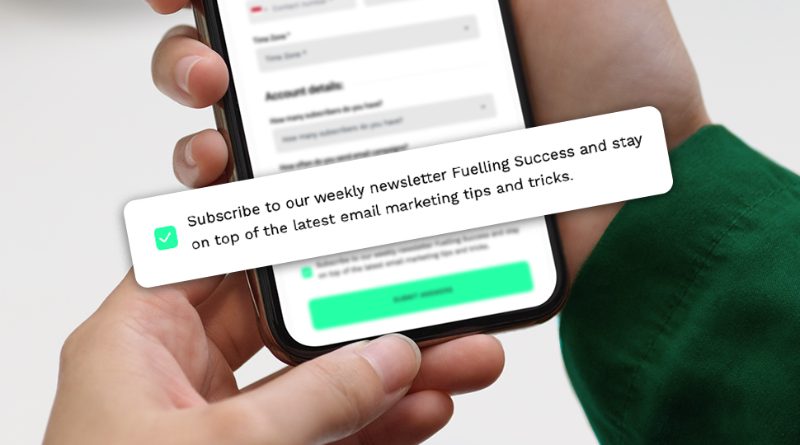
- An unchecked opt-in box, never pre-checked. If someone has to actively opt in, only people who actually want to be there will
- Separate consent statements for separate types of communication. If you send a newsletter and occasional promotional offers, those should be two separate opt-ins, not bundled together
- A link to your privacy policy, not buried, but genuinely accessible
- No dark patterns: no misleading button text, no double negatives ("uncheck this box if you do not want to not receive emails"), no consent hidden in terms and conditions
The confirmation email is part of the consent process
A double opt-in, where the subscriber receives a confirmation email and must click a link before being added to your list, is the gold standard for consent quality.
It adds one step for the subscriber. In exchange, it confirms the email address is real and actively managed, it gives you a clear timestamp of confirmed consent, it filters out people who mistyped their address or signed up impulsively, and it sets a positive precedent by starting the relationship with a clear, purposeful action.
Single opt-in with a strong confirmation email, one that sets expectations and makes a genuine first impression, is a reasonable alternative for lower-risk list-building contexts. What is not a reasonable alternative is no confirmation at all.
Setting expectations in the welcome sequence
Consent does not end at sign-up. It is maintained through every send.
The welcome sequence, the first two or three emails a new subscriber receives, is where you either build on the permission they gave you or start eroding it. The most common mistake is to use the welcome sequence purely for selling: a discount code, an upsell, a product promotion. The subscriber signed up for content and the first thing they receive is a pitch.
A consent-maintaining welcome sequence does something different. It delivers on the promise made at sign-up. It introduces the sender as a real person with a genuine point of view. It sets a clear expectation for what comes next. And it gives the subscriber an easy way to tell you what they are most interested in, so that subsequent sends can be more relevant from the start.

Keeping records
Good consent practices need to be documented. For each subscriber, you should be able to answer: when did they sign up, through which channel, what did the consent statement say at that point, and has their consent been refreshed if your communications have changed significantly since then.
This is not just a compliance requirement. It is the information you need to make good decisions when you are reviewing your list health, planning a reconfirmation campaign, or responding to a subscriber query about why they are receiving your emails.
Mail Blaze's consent management tools are built to capture and track exactly this information, so it is accessible when you need it rather than buried in a spreadsheet that may or may not be accurate.
The compounding return on getting this right
A sign-up process built on genuine consent produces a list that improves over time. Engagement rates are higher because every subscriber chose to be there. Deliverability is more stable because inbox providers see consistent positive signals. Unsubscribe rates are lower because the expectation set at sign-up matches the reality of what arrives.
And when you need to grow the list, you are growing from a strong base rather than diluting a strong core with low-quality additions.
That compounding effect is the long-term return on doing consent properly from the start. It does not show up in the numbers immediately. But it is real, and it builds.
Explore further about Content Marketing article here.

A comprehensive guide to open rates
Better open rates usually translate to better click-through rates, but now you see your open rates are declining. What do you do? This article will unpack the science behind email open rates and he...

Maximising email engagement: Strategies and tactics
Every marketer knows that sending emails is still a great way to reach people. But without the right tricks under your belt, it can be more difficult to engage your subscribers than it needs to be....

Create a survey with Mail Blaze
Learn how to create your own customer surveys using Mail Blaze
Explore further about Content Marketing article here.
A comprehensive guide to open rates
Better open rates usually translate to better click-through rates, but now you see your open rates are declining. What do you do? This article will unpack the science behind email open rates and he...
Maximising email engagement: Strategies and tactics
Every marketer knows that sending emails is still a great way to reach people. But without the right tricks under your belt, it can be more difficult to engage your subscribers than it needs to be....
Create a survey with Mail Blaze
Learn how to create your own customer surveys using Mail Blaze
A comprehensive guide to open rates
Better open rates usually translate to better click-through rates, but now you see your open rates are declining. What do you do? This article will unpack the science behind email open rates and he...
A comprehensive guide to open rates
Better open rates usually translate to better click-through rates, but now you see your open rates are declining. What do you do? This article will unpack the science behind email open rates and he...
Maximising email engagement: Strategies and tactics
Every marketer knows that sending emails is still a great way to reach people. But without the right tricks under your belt, it can be more difficult to engage your subscribers than it needs to be....
Create a survey with Mail Blaze
Learn how to create your own customer surveys using Mail Blaze
Still haven't found what you are looking for?
Book a demo with us and see Mail Blaze in action, or reach out to our support team for expert assistance. We're here to help you every step of the way!
Still haven't found what you are looking for?
Still haven't found what you are looking for?
Book a demo with us and see Mail Blaze in action, or reach out to our support team for expert assistance. We're here to help you every step of the way!
Book a demo with us and see Mail Blaze in action, or reach out to our support team for expert assistance. We're here to help you every step of the way!
2026 © Mail Blaze. All rights reserved.