


List Health | 3 min read
List Health | 3 min read
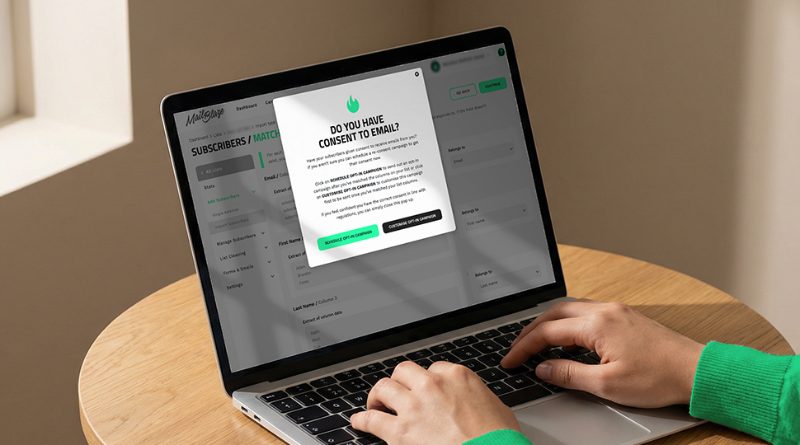
Most marketers think their list is consented. Most are at least partly wrong.
Not because they have done anything dishonest. But because consent, in the way it actually functions for email performance, is harder to earn than a ticked box suggests. And the gap between technical compliance and genuine consent is exactly where most list problems live.
The legal definition and the real one
Regulations like GDPR and POPIA define consent in legal terms: it must be freely given, specific, informed, and unambiguous. Pre-checked boxes do not qualify. Bundled consent does not qualify. Implied consent, which is what many older lists were built on, increasingly does not qualify either.
But legal compliance is the floor, not the ceiling. You can have technically compliant consent and still have a permission problem.
The real definition of consent, the one that actually affects your results, is this: the subscriber understood what they were signing up for, actively chose to receive it, and still recognises and expects your emails when they arrive. That third element is the one most compliance frameworks do not measure, and it is the one that determines whether your emails get opened or ignored.
How most lists develop a consent problem
Lists with consent problems rarely got that way through bad intent. They got that way through accumulated shortcuts.
- A bulk import of contacts from a previous CRM, an old spreadsheet, or a partner database where the original consent was vague or non-existent
- A sign-up form with a pre-checked "yes to marketing" box that most people did not notice
- A lead magnet that attracted people who wanted the free resource but had no particular interest in ongoing emails
- A consent statement that covered "updates and offers" broadly enough to mean anything, which means it effectively communicated nothing
- Contacts added manually by sales or event teams without a clear consent record
None of these is catastrophic on its own. Together, over time, they produce a list where a significant proportion of subscribers have a fragile connection to your brand. They are technically on the list. They are not really there by choice.
Why it shows up in the results
Inbox providers do not read your consent forms. They watch behaviour. When subscribers consistently do not open, do not click, and occasionally mark emails as spam, those signals accumulate and affect where your emails land for everyone on your list, including the subscribers who genuinely want to hear from you.
This is why a consent problem is not just an ethical or legal issue. It is a performance issue. The subscribers you added without real permission are actively making it harder to reach the ones you have earned.

What genuine consent looks like in practice
Genuine consent has four qualities:
- Specific: the subscriber knew what they were signing up for, not just "marketing communications" in general
- Active: they chose to opt in, not failed to opt out
- Matched: what arrives in their inbox corresponds to what they expected when they signed up
- Maintained: the relationship has been kept warm through consistent, relevant sends, not allowed to go cold for months before a bulk reactivation attempt
Most lists have some subscribers who meet all four criteria and some who meet none. The work of building a properly consented list is partly about how you add new subscribers and partly about what you do with the ones who were added without that standard.
Mail Blaze's consent management tools give you the ability to record, track, and act on consent at the subscriber level. Knowing what you have is the first step to fixing it.
Explore further about Content Marketing article here.

Maximising email engagement: Strategies and tactics
Every marketer knows that sending emails is still a great way to reach people. But without the right tricks under your belt, it can be more difficult to engage your subscribers than it needs to be....

Best Email Marketing Platforms in South Africa 2026
Compare the top email marketing platforms in South Africa, local versus international. Mail Blaze, Touchbase pro Mailchimp and more compared

The email marketers periodic table of elements
Learn all about email marketing by taking a closer look at all the elements involved in the email marketing journey.
Explore further about Content Marketing article here.
Maximising email engagement: Strategies and tactics
Every marketer knows that sending emails is still a great way to reach people. But without the right tricks under your belt, it can be more difficult to engage your subscribers than it needs to be....
Best Email Marketing Platforms in South Africa 2026
Compare the top email marketing platforms in South Africa, local versus international. Mail Blaze, Touchbase pro Mailchimp and more compared
The email marketers periodic table of elements
Learn all about email marketing by taking a closer look at all the elements involved in the email marketing journey.
Maximising email engagement: Strategies and tactics
Every marketer knows that sending emails is still a great way to reach people. But without the right tricks under your belt, it can be more difficult to engage your subscribers than it needs to be....
Maximising email engagement: Strategies and tactics
Every marketer knows that sending emails is still a great way to reach people. But without the right tricks under your belt, it can be more difficult to engage your subscribers than it needs to be....
Best Email Marketing Platforms in South Africa 2026
Compare the top email marketing platforms in South Africa, local versus international. Mail Blaze, Touchbase pro Mailchimp and more compared
The email marketers periodic table of elements
Learn all about email marketing by taking a closer look at all the elements involved in the email marketing journey.
Still haven't found what you are looking for?
Book a demo with us and see Mail Blaze in action, or reach out to our support team for expert assistance. We're here to help you every step of the way!
Still haven't found what you are looking for?
Still haven't found what you are looking for?
Book a demo with us and see Mail Blaze in action, or reach out to our support team for expert assistance. We're here to help you every step of the way!
Book a demo with us and see Mail Blaze in action, or reach out to our support team for expert assistance. We're here to help you every step of the way!
2026 © Mail Blaze. All rights reserved.